Introduction
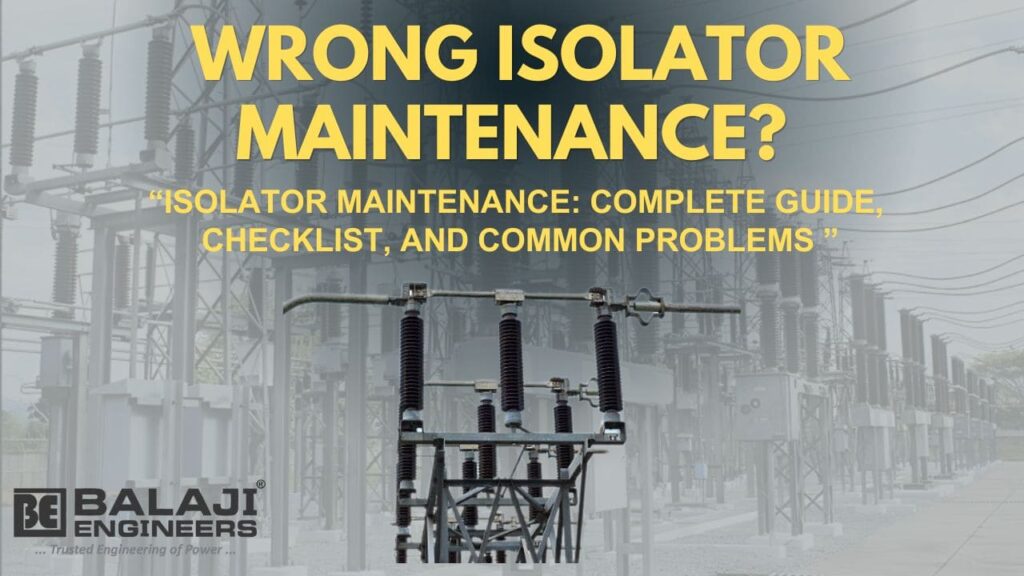
Isolators are critical components in electrical substations, used to ensure safety by isolating equipment during maintenance. However, improper maintenance can lead to failures, overheating, and costly shutdowns.
At Balaji Engineers Isolators Pvt. Ltd., we have extensive experience supplying isolators for solar, wind, and utility substations across India. Based on real field experience, this guide answers the most searched questions about isolator maintenance.
What is Isolator Maintenance?
- Learn more about our isolator product range in the “Products” section of our website.
How Often Should Isolators Be Maintained?
- Routine Inspection: Monthly or Quarterly
- Preventive Maintenance: Once every year
- High Pollution Areas (Coastal/Industrial): Every 6 months
- Explore our applications in solar and wind projects under the “Projects” section.
Step-by-Step Isolator Maintenance Procedure
- Check for dust, dirt, and contamination
- Inspect insulators for cracks or damage
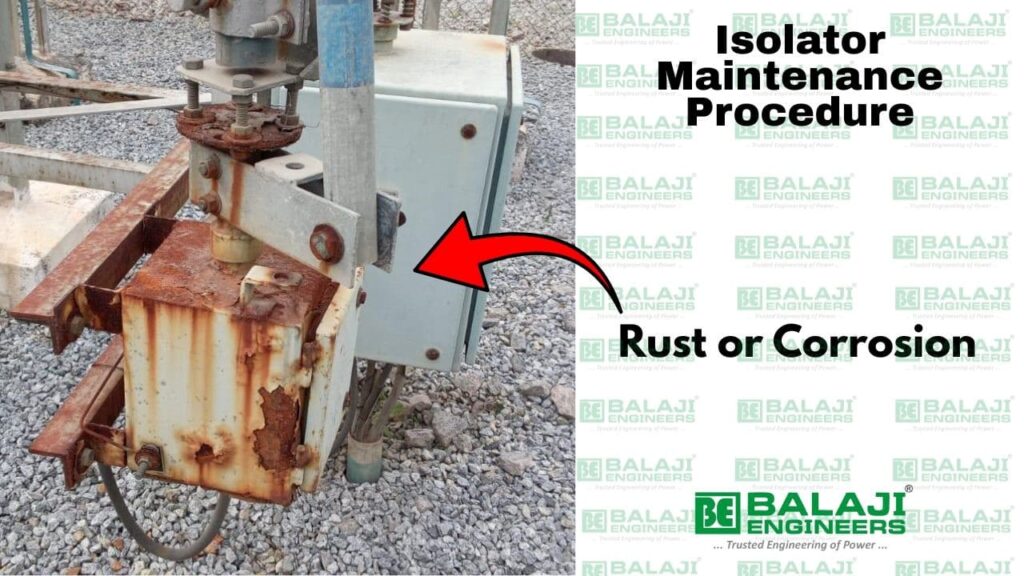
- Look for rust or corrosion
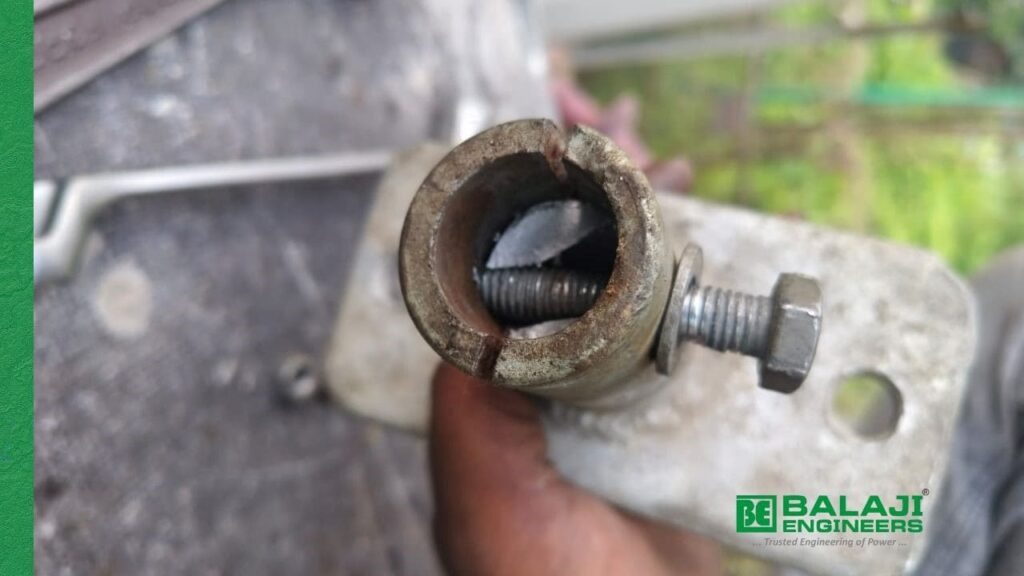
- Clean insulators using a dry cloth or approved solution
- Remove pollution deposits
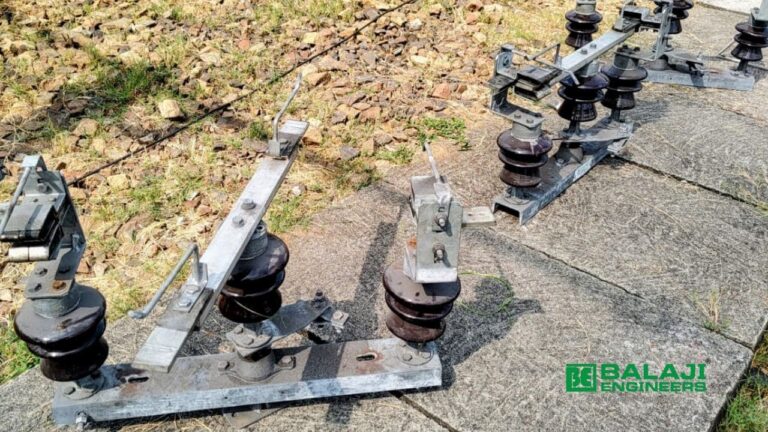
- Check for burning, pitting, or wear
- Ensure proper contact pressure
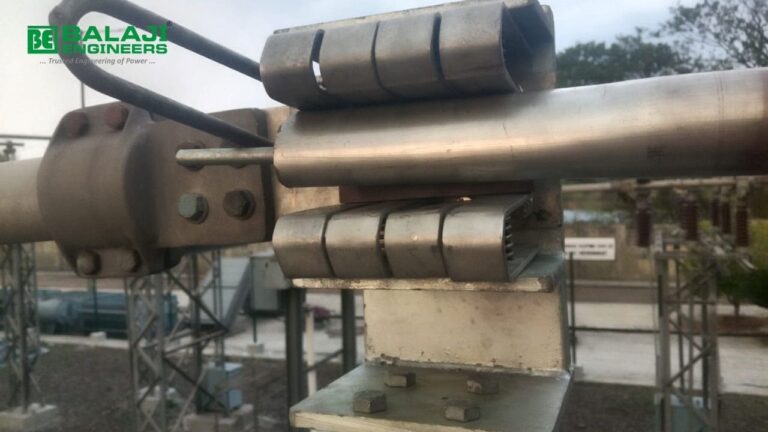
- Apply grease to moving parts
- Lubricate operating mechanism
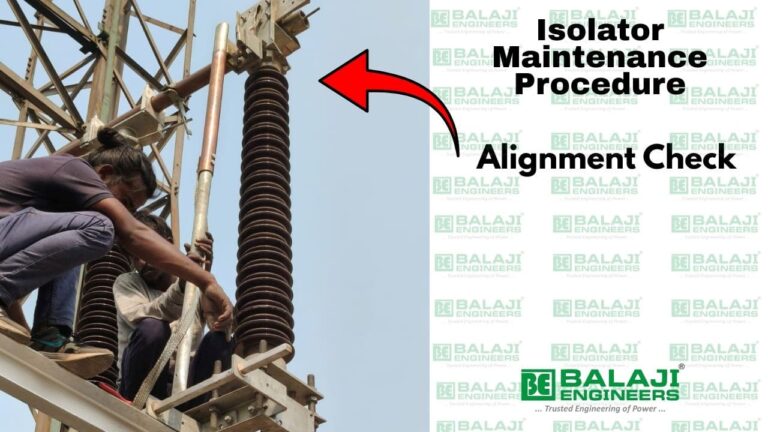
- Ensure proper alignment of moving and fixed contacts
- Always perform manual operation first before motor operation
- For detailed guidance, refer to our “Installation & Maintenance Support” section.
- Tighten all nuts, bolts, and connectors
- Measure contact resistance using micro-ohmmeter
- Compare phase readings
What are the Common Problems in Isolators ?
1. Contact Burning
Due to high resistance or improper contact pressure , substandard copper material used or low capacity of copper sections are used during manufacturing of Isolator
2. Misalignment
One of the most common issues observed during site commissioning. The one of the major reason behind the misalignment is error or improper design of manufacturer . And second improper fixing of Isolator while erection of Isolator in the site.
3. Corrosion and Rusting
Especially in outdoor and coastal substations. This is major issue M S parts where Hot Dip Galvanised process is improper and less than 86 Micron in normal and less than 120 micron in costal area.
4. Insulator Failure
Cracks or flashover due to pollution .This is due to low quality Insulators are used
5. Mechanism Jamming
Caused by lack of lubrication or poor maintenance. This is due to improper design of manufacturer . And second improper fixing of Isolator while erection of Isolator in the site.
Why Do Isolators Fail?
- Poor maintenance practices
- Environmental conditions (dust, moisture, salt)
- Improper installation
- Mechanical wear and tear
- High contact resistance
At Balaji Engineers, our reverse loop contact design ensures better contact stability and reduces the risk of failure due to vibration or wind load.
Safety Precautions During Maintenance
- Ensure complete shutdown before work
- Follow Lockout-Tagout (LOTO)
- Proper earthing must be done
- Use PPE (gloves, helmet, safety shoes)
- Never operate isolator under load
Isolator Maintenance Checklist
- Visual inspection
- Cleaning of insulators
- Contact condition check
- Lubrication
- Alignment verification
- Tightening of hardware
- Contact resistance testing
Preventive vs Breakdown Maintenance
| Type | Description |
|---|---|
| Preventive Maintenance | Planned and avoids failure |
| Breakdown Maintenance | Done after failure (costly and risky) |
Why Choose Balaji Engineers for Isolators?
- Proven experience in solar, wind & utility substations
- Strong mechanical design for long life
- Reliable performance in Indian site conditions
- Technical support for installation and maintenance
- “Contact Us” page for project inquiries and technical support.
Conclusion
Tags
- isolator maintenance
- substation isolator maintenance
- isolator maintenance checklist
- isolator problems and solutions
- isolator alignment procedure
- isolator contact resistance test
- isolator maintenance guide India
Frequently Asked Questions (FAQs) on Isolator Maintenance
What are the common problems in isolators?
The most common problems in isolators include:
- Contact burning or pitting
- Misalignment of moving and fixed contacts
- Corrosion or rusting of metallic parts
- Insulator cracking or contamination
- Mechanism jamming due to poor lubrication
These issues can lead to overheating, improper operation, and even equipment failure if not addressed in time.
Why does an isolator fail?
Isolator failure usually occurs due to:
- Poor or irregular maintenance
- Environmental factors like dust, moisture, and salt
- Improper installation or alignment
- High contact resistance
Mechanical wear and tear
How can isolator problems be prevented?
Most isolator problems can be prevented by:
- Regular inspection and cleaning
- Proper lubrication of moving parts
- Ensuring correct alignment
- Periodic contact resistance testing
Tightening of all hardware connections
How do you identify a faulty isolator?
A faulty isolator can be identified by:
- Visible burning marks on contacts
- Difficulty in operation (hard or stuck movement)
- Uneven closing of contacts
- Abnormal heating during operation
- Cracks or damage in insulators
What happens if isolator maintenance is not done properly?
Improper maintenance can result in:
- Increased contact resistance
- Overheating and energy loss
- Equipment damage
- Risk of electrical faults
Reduced lifespan of the isolator
How often should isolators be inspected?
- Visual inspection: Monthly or quarterly
- Preventive maintenance: Annually
- High pollution areas: Every 6 months
What is the most critical part of isolator maintenance?
The most critical aspects are:
- Contact condition and pressure
- Proper alignment
- Smooth mechanical operation
These directly impact performance and safety.
Can isolator maintenance be done without shutdown?
No, isolator maintenance should always be done under complete shutdown conditions.
Proper safety procedures like earthing and Lockout-Tagout (LOTO) must be followed.
What tools are used for isolator maintenance?
Common tools include:
- Micro-ohmmeter (for contact resistance testing)
- Torque wrench
- Grease gun
Cleaning tools and materials
How to improve isolator life?
To increase isolator lifespan:
- Follow proper maintenance schedule
- Use quality components
- Ensure correct installation
- Protect against environmental damage
Best Isolator Maintenance agency in India .
Balaji Engineers is the Top Maintenance agency in India having skilled team with experience from 2004 .
Where can I get isolator spare parts in India?
Isolator spare parts can be sourced from:
- Original Equipment Manufacturers (OEMs)
- Authorized suppliers and distributors
- Specialized electrical equipment manufacturers
It is always recommended to procure spare parts from a trusted and experienced manufacturer to ensure proper fitment, performance, and safety.
At Balaji Engineers Isolators Pvt. Ltd., we provide:
- Genuine isolator spare parts
- Technical support for selection and replacement
- Solutions suitable for solar, wind, and utility substations
For reliable performance and long service life, always use quality-approved components instead of local or unverified parts.
Where can I get isolator Motor operation box spare parts in India?
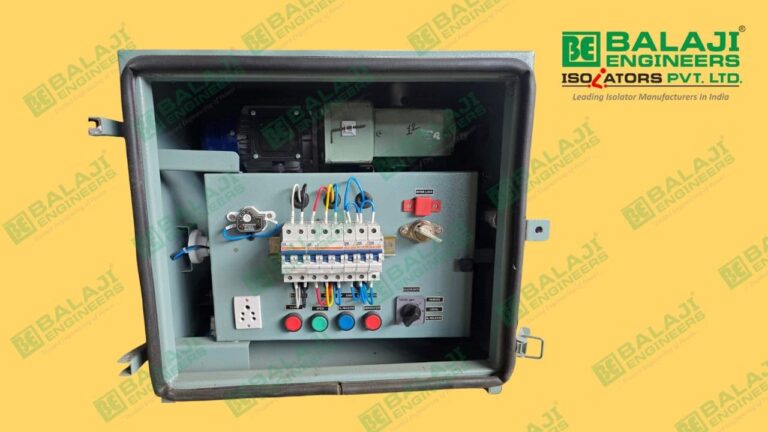
Balaji Engineers is a one of the leading isolator Motor operation boxes in India. Balaji Engineers carry huge stock of motor operation box spare parts , Motor , Motor gear drive , Reduction gear assembly ,Limit switch , Connectors , Relay ,Contractors , Castle key assembly , mechanical handle ,push buttons , Encloser box ,Auxiliary switch etc all .