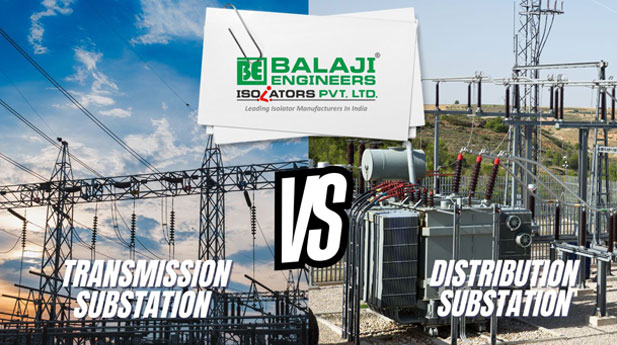
Transmission Substation vs Distribution Substation
What Is a Power Substation?
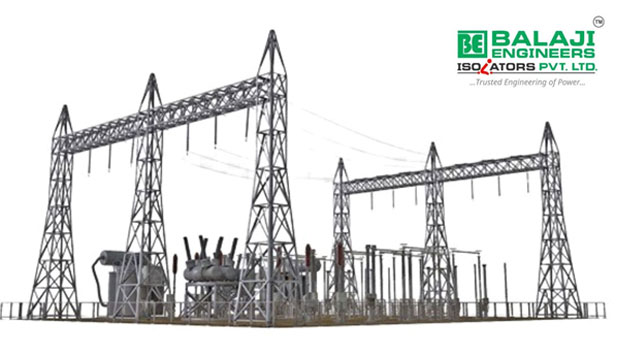
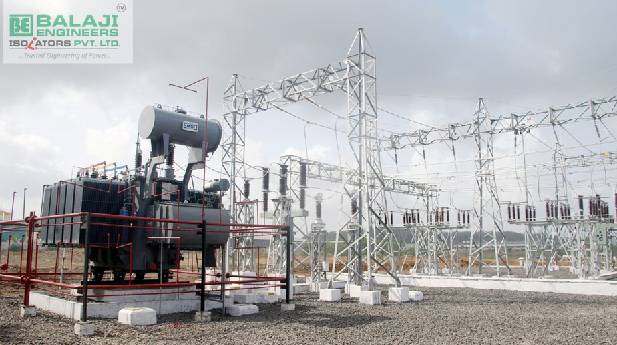
Transmission Substation (High-Voltage Backbone)
Key Features
- Voltage Level: Very High Voltage (VHV) — e.g., 66kV up to 220kV and beyond.
- Function: Transmit bulk power with minimal losses over long distances.
- Land & Scale: Larger area, complex switchyard configuration.
- Equipment: Large transformers, breakers, protective relays, and high-voltage isolators
Isolator Use
Explore Balaji Engineers isolators for transmission substations :
- 132 kV High Voltage Isolator — ideal for EHV grids.
- 220 kV Outdoor Isolator — engineered for heavy-duty isolation in major transmission yards
Distribution Substation
A Distribution Substation takes high-voltage electricity from the transmission system and steps it down to safer voltage levels for local use. These substations are typically closer to towns, cities, and industrial clusters.
Key Features
- Voltage Level: Medium to Low Voltage — e.g., 11 kV, 22 kV, 33 kV.
- Function: Decreases high transmission voltages to distribution levels for consumers.
- Proximity to Load Centers: Installed near residential, commercial, and industrial users.
- Equipment: Distribution transformers, feeders, switchgear, and medium-voltage isolators.
Isolator Use
In distribution substations, products like 22 kV High Voltage Isolators, 33 kV Isolators, and 11 kV Isolators with Earth Blade are essential for sectionalizing circuits safely while supplying power locally.
Explore Balaji Engineers isolators for distribution networks
- 22 kV High Voltage Outdoor Isolator — perfect for distribution applications.
- 33 kV Substation Isolator — robust solution for medium-voltage sites.
- 11 kV Isolator with Earth Blade — ideal for local distribution and rural electrification.
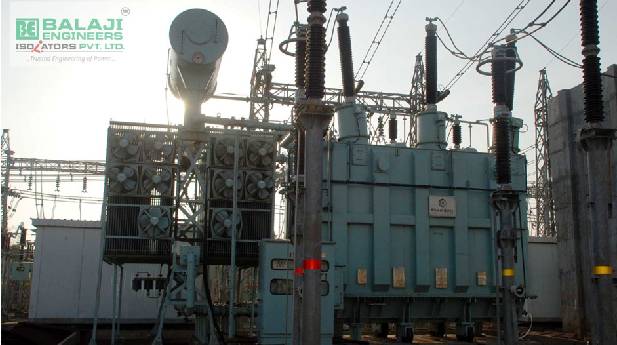
Power Transformer
Transmission vs Distribution Substation – Quick Comparison
| Feature | Transmission Substation | Distribution Substation |
|---|---|---|
| Voltage Levels | ≥ 66 kV (up to 220 kV+) | 11–33 kV (Medium / Low) |
| Function | Bulk transfer of power | Step-down & delivery to consumers |
| Size & Complexity | Larger, complex | Smaller, simpler |
| Key Equipments | EHV isolators, breakers | MV isolators, transformers |
Why Choosing the Right Isolators Matters
Isolators are manually operated disconnect switches that ensure a portion of the power system is safely de-energized for maintenance or emergency isolation. Their performance directly affects reliability and safety in both transmission and distribution substations.
Balaji Engineers Isolators are :
- Designed and tested per IEC 62271-102 standards.
- Available across a full range — 11 kV to 220 kV.
- Suitable for transmission, distribution, and renewable substations.