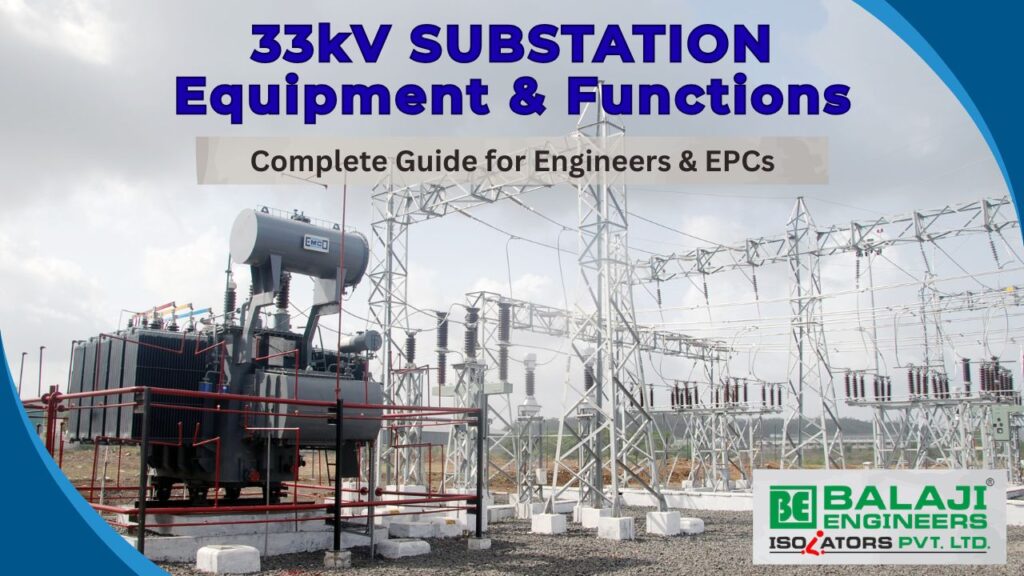
A 33kV substation plays a critical role in power distribution for industrial plants, solar power projects, wind farms, and utility networks. Understanding the equipment used in a 33kV substation and their functions is essential for engineers, EPC contractors, and maintenance teams.
This guide explains the primary and secondary equipment used in a 33kV outdoor substation, along with their technical functions and importance.
We know all that Substation of Distribution and transmission are different in their function .Distribution function plays role to step down the voltage and distribute to Villages, cities ,industrial areas , agriculture sector by 33kV,11kV,0.433 V
Transmission substation is feeding by Generation substation to stabilise the voltage and carry higher voltages to lower voltages such as 400kV,220kV,132kV,110kV,66kV up to distribution substations .
Substation equipment’s are designed to fulfil the need of Distribution and transmission substations . These equipment’s are different in specifications as per their requirement in substation .
Let’s dive in the subject of substation equipment . For example we will consider the most common voltage level i.e 33kV volage . We will see more about 33kv substation in this blog .
What is a 33kV Substation?
It is commonly used in:
- Solar power plants
- Wind power projects
- Industrial power distribution
- Utility grid substations
- Private H T Consumer
- Power Generation End
Primary Equipment in 33kV Substation
1. Isolator (Disconnector)
Function:
Key Features:
- Rated Voltage: 36kV (for 33kV system)
- Rated Current: 400A / 630A / 800A / 1250 A / 1600 A / 2000 A/ 3150 A
- Polymer or Porcelain Insulators
- With or without earthing switch
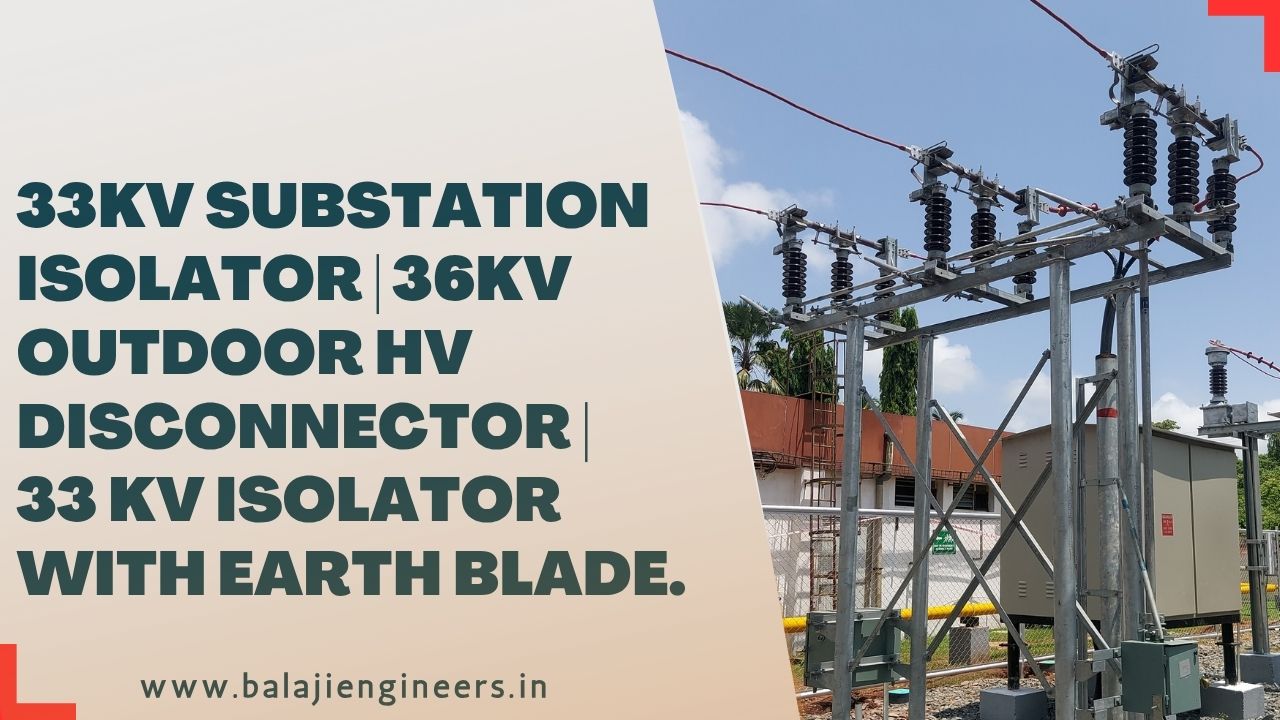
Isolators are installed near circuit breakers, transformers, and outgoing feeders.
Mainly Isolator is play very important role in substation . It disconnects the current as and when required by motor operated remotely or by manually . This is very important for electrical technicians who are working in the substation. Technicians can view the current is off or on in condition by Isolator.
2. Circuit Breaker (CB)
Function:
Types Used in 33kV:
- Vacuum Circuit Breaker (VCB)
- SF6 Circuit Breaker
3. Current Transformer (CT)
Function:
Importance:
- Used for overcurrent protection
- Used for energy metering
- Provides input to protection relays
4. Potential Transformer (PT) / Voltage Transformer (VT)
Function:
Applications:
- Voltage measurement
- Protection schemes
- Synchronization panels
5. Lightning Arrester (LA)
Function:
- Transformers
- Incoming lines
- Equipment terminals
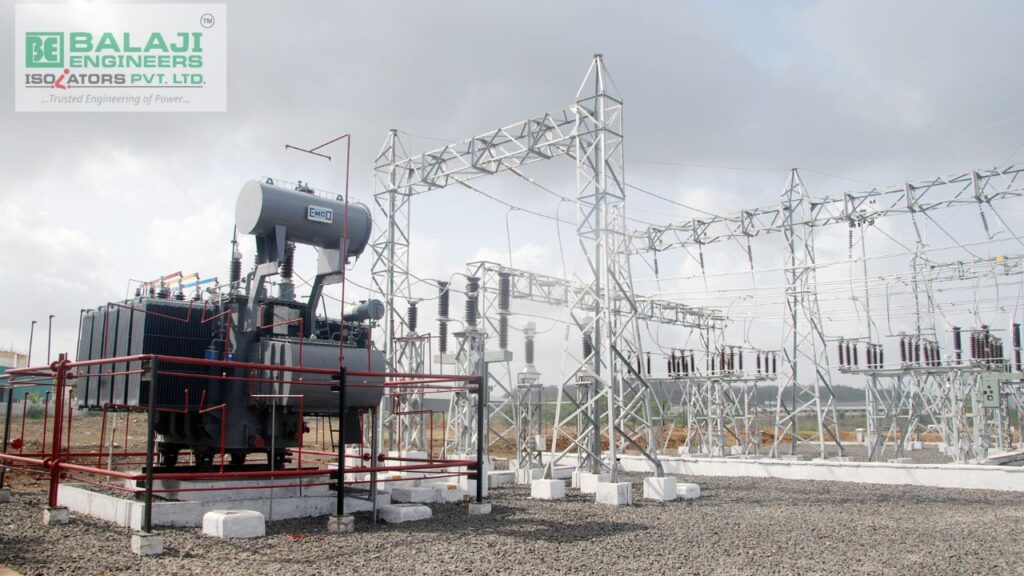
6. Power Transformer
Function:
- 33kV to 11kV
- 33kV to LT level
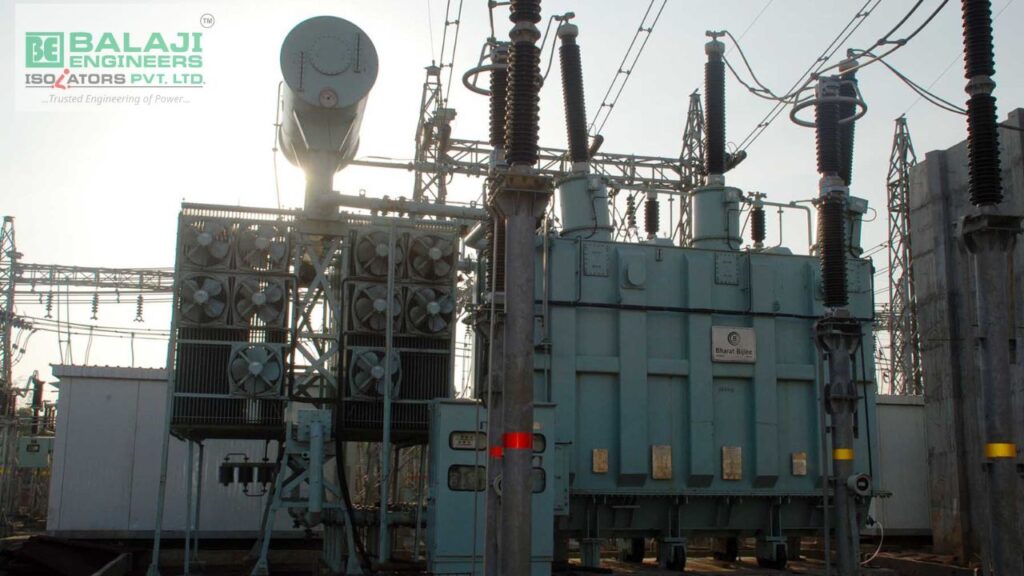
It is one of the most critical components of the substation.
7. Busbar
Function:
Busbars collect and distribute power within the substation.
They are made of:
- Copper
- Aluminium
Secondary Equipment in 33kV Substation
1. Protection Relays
Function:
Detect abnormal conditions and send trip signals to circuit breakers.
Common relay types:
- Overcurrent relay
- Earth fault relay
- Differential relay
2. Control & Relay Panels
Function:
- Protection logic
- Control switching
- Alarm indication
- Monitoring systems
Control relay panel is a brain of substation , CR panel controls the Isolator and other equipment’s . Isolator is commanded by remotely by CR panel , Indication of ON or Off can be visible on CR panel .
3. SCADA System
Function:
Supervisory Control and Data Acquisition system allows:
- Remote monitoring
- Remote operation
- Data logging
- Fault analysis
SCADA is widely used in solar and wind substations.
Equipment Used in 33kV Solar Substation
- Higher creepage distance due to dusty environments
- Polymer insulators preferred
- Motorized isolators for remote operation
- Compact outdoor layouts
Typical 33kV Substation Equipment Summary
| Equipment | Main Function |
|---|---|
| Isolator | Provides visible isolation during maintenance |
| Circuit Breaker | Interrupts fault current |
| Current Transformer | Measures current for protection & metering |
| Potential Transformer | Measures voltage |
| Lightning Arrester | Protects against surges |
| Transformer | Voltage transformation |
| Busbar | Power distribution inside substation |
| Protection Relay | Detects faults |
| Control Panel | Controls and monitors system |
Conclusion
A 33kV substation consists of carefully selected primary and secondary equipment that ensures safe power distribution, system protection, and operational reliability.
Proper selection of isolators, circuit breakers, transformers, and protection systems improves system life, reduces downtime, and enhances safety.
For solar and renewable projects, equipment must be selected considering environmental conditions, pollution levels, and utility standards.
Understanding each equipment’s function helps engineers design efficient and reliable substations.
Frequently Asked Questions (FAQs)
Q1. What are the main equipment used in a 33kV substation?
These equipment ensure safe switching, protection, voltage transformation, and power distribution.
- Isolator (Disconnector)
- Circuit Breaker (VCB or SF6)
- Current Transformer (CT)
- Potential Transformer (PT) / Voltage Transformer (VT)
- Lightning Arrester (LA)
- Power Transformer
- Busbar
- Protection Relays and Control Panels
These equipment ensure safe switching, protection, voltage transformation, and power distribution.
Q2. What is the function of an isolator in a 33kV substation?
Q3. What is the difference between isolator and circuit breaker?
The main difference is:
- Isolator operates under no-load conditions and provides isolation
- Circuit breaker operates under load and fault conditions and interrupts current automatically
Circuit breakers provide protection, while isolators provide safe isolation.
Q4. Why is a lightning arrester used in a 33kV substation?
Q5. What is the role of current transformer (CT) in a substation?
A current transformer reduces high current to safe measurable values.
It is used for:
- Protection relay operation
- Energy metering
- Fault detection
CTs ensure accurate monitoring and protection of the system.
Q6. What is the function of potential transformer (PT)?
A potential transformer reduces high voltage to standard measurable voltage levels.
It is used for:
- Voltage measurement
- Protection systems
- Control and synchronization
PTs provide voltage input to protection relays and meters.
Q7. Why are polymer insulators preferred in modern 33kV substations?
Polymer insulators are preferred because they offer:
- Better performance in polluted environments
- Lower maintenance requirements
- Higher resistance to contamination
- Lightweight construction
They are widely used in solar and outdoor substations.
Q8. What is the function of a circuit breaker in a 33kV substation?
Q9. What is the role of busbar in a substation?
Q10. What equipment is specifically important for solar power substations?
Solar substations require:
- Isolators with higher creepage distance
- Polymer insulators
- Lightning arresters
- Circuit breakers
- CT and PT for protection and metering
These ensure reliable operation in outdoor and high-pollution environments.
Q11. What standard is followed for 33kV substation equipment?
Common standards include:
- IEC 62271 series (High voltage switchgear)
- IS standards (Indian Standards)
- Utility-specific technical specifications
Equipment must comply with these standards for safety and reliability.
Q12. Which isolator rating is commonly used in 33kV substations?
Common isolator ratings include:
- Voltage rating: 36kV
- Current rating: 400A, 630A, or 800A
- Creepage distance: 25 mm/kV to 31 mm/kV
630A isolators are widely used in solar and industrial substations.
Q13. Applicable Standards for 33kV Substation Equipment
Add: Isolator – IEC 62271-102
- Circuit Breaker – IEC 62271-100
- CT – IEC 61869
- PT – IEC 61869-3
- Lightning Arrestor – IEC 60099-4
- Insulators – IEC 61109
- Earthing – IEEE 80
People Also Search For
- What are the components of a 33kV substation?
- What is the function of isolator in substation?
- Difference between circuit breaker and isolator
- What is lightning arrester in substation?
- What is CT and PT in substation?
- What is the function of busbar in substation?
- What equipment is used in solar substation?
- What is a 33kV outdoor substation?
- What is RMU in 33kV system?
- What is the voltage level of 33kV substation?
- What is feeder in substation?
- What is bay in substation?
- Whis is the best brand in Isolator
- Top Isolator manufacturers in India
- Best exporters of Isolators Disconnectors from India.